Fuji explains why they don’t bother go Full Frame.

Fujirumors spotted an explanation from Fuji why they don’t go Full Frame. Fuji Manager Takashi Ueno says:

We gave a lot of thought to this, and reached our conclusion that APS-C is the best format for the optimum balance of body size and image quality.

Higher image quality can be achieved with full frame sensors, but in order to maximize the use of the sensor size, the lens will be very bulky and heavy.

With the power of FUJINON lens, we can achieve the full frame image quality with the APS-C sensor. We learned that the disadvantage can be recovered with the lens performance through various simulations.

Here is an example. It is generally believed that the lens performs at its best with 1 to 2 stop down from the maximum aperture. We tried to break the norm. Because if there is such belief, then the lens is very unlikely to perform at its best from corner to corner with the aperture wide open. But if we can break the norm, then we will achieve bokeh and sharpness that is equivalent to that of a full frame with 1 to 2 stop down. We can achieve the image quality that is equivalent to that of full frame.

Which is better? An f/1.4 lens on a full frame sensor and then used 1 stop down to prevent degradation in the image quality in the corner or an f/1.4 lens on an APS-C that see no degration in the image quality at its maximum aperture value?

You cannot really see the difference in bokeh between the APS-C wide open and the full frame one stop down. However, if the APS-C is wide open, then the shutter speed will be twice as fast as the full frame resulting in be less blur caused by hand shake or subject movement. If the picture becomes blurry, then the high image quality becomes meaningless.”

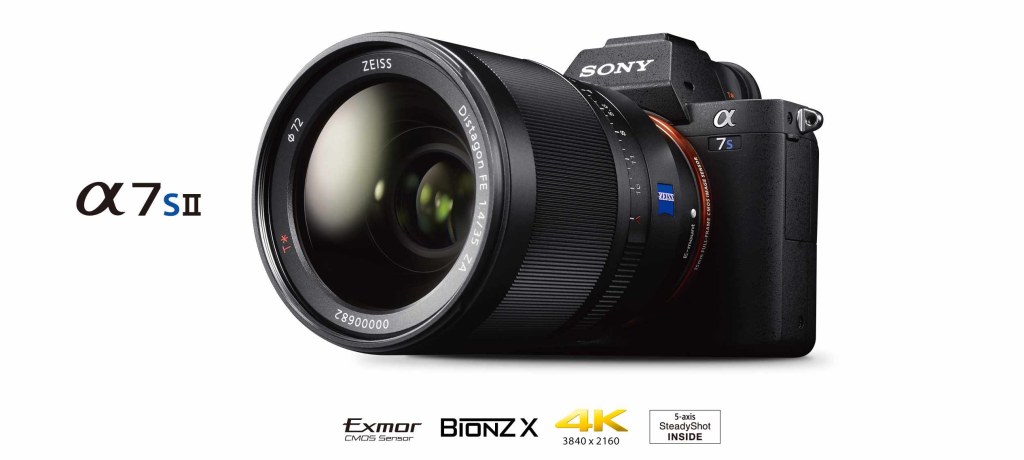
I have to say I do NOT agree with Fuji. Don’t think their X-Trans sensors can keep up with the Sony sensor technology madness on cameras like the A7s and A7rII. They definitely should go Full Frame or even Medium Format if the don’t want to remain in the very niche. Full Frame is already becoming mainstream with cameras like the A7 selling for less than $1,000!

One more Panasonic announcement to come in July!

The announcement party isn’t completely over yet. There is one one thing to come from Panasonic before the hot Summertime season….or Winter time if you live on the wrong side of the planet :)

Panasonic is likely to introduce a new FX300 superzoom lens with 1 inch (Sony) sensor. There is also a rumor about a new MFT telephoto lens.

After the Panasonic announcement we expect Sony-Olympus-Nikon-Canon to have new announcement in September and October.

DxO announces their very smart “DxO One” iPhone Plugin Photocamera!

I believe for the very first time a company made a significant step forward to a really useable smartphone camera hardware plugin solution. Unlike the Sony QX Lenscamera series the new DxO One looks like a much more elegant and simple solution!

Dpreview writes:

Image quality will far exceed that of the current iPhone models, due to the 1″-type sensor paired with the bright F1.8 lens. On top of that, expert image processing is nothing new to DxO, and the ONE’s ‘SuperRaw’ mode should lead to significantly better low-light performance (more later).

Its size means there’s no energy barrier to you just carrying it with you everywhere you go. Since the display and some of the computing power are off-loaded to the phone and to the desktop software (for processing of Raws, for example), you cut down on the size and weight of the camera, since you’ve always got a little computer and display in your pocket anyway.

It’s the first truly connected camera. Yes we’ve seen the likes of the QX-series of cameras from Sony, the Olympus Air, etc., but the fast, physical lightning connection to the iPhone means a very usable live display (there’s barely any lag, and certainly no stuttering). Additionally, DxO will push updates to the dedicated app and the camera’s firmware as well. We’ve been waiting a long time for something like this, and DxO promises it already has a roadmap for new features to be added to the camera firmware itself.

Hands-on at Techradar:

This is an exciting development from a company that knows a lot about lens design and image quality. The One is well made and is simple to use but it has a price that’s comparable with that of a decent SLR or CSC kit.

Really a smart gadget from DxO!!!